

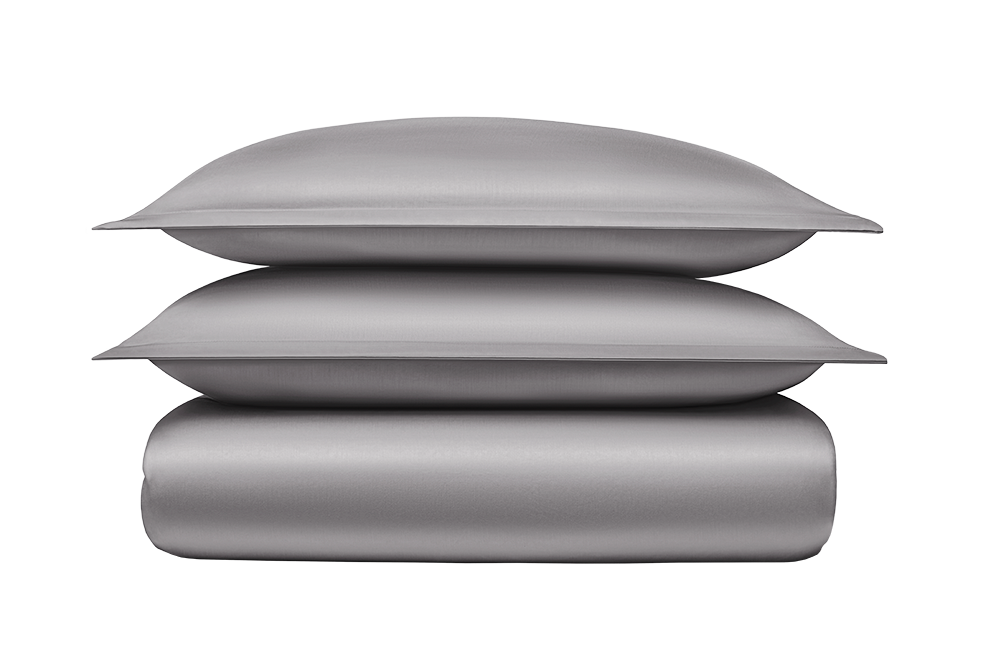
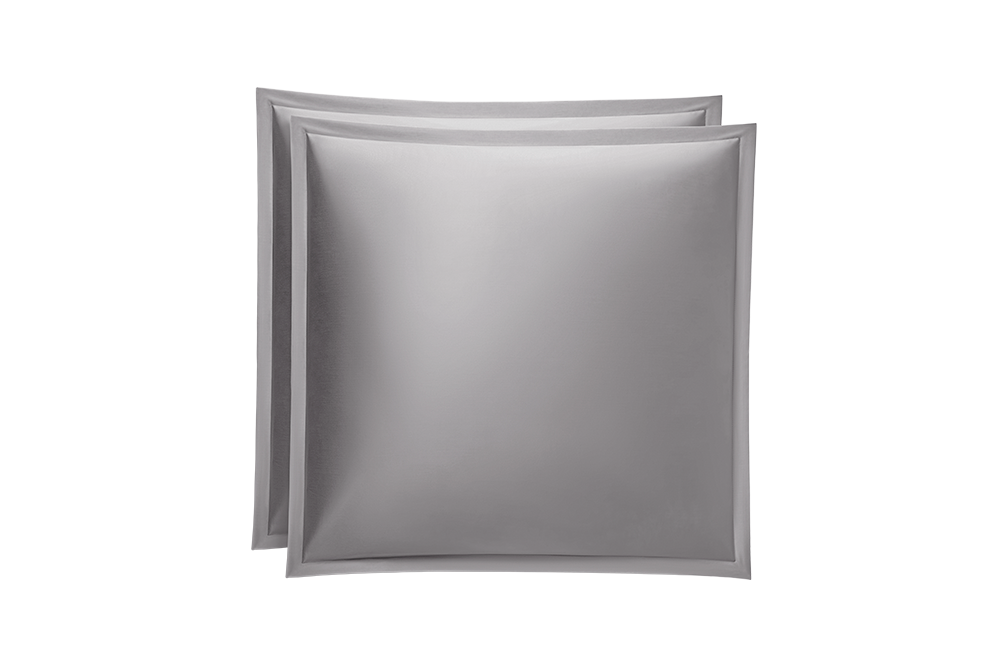
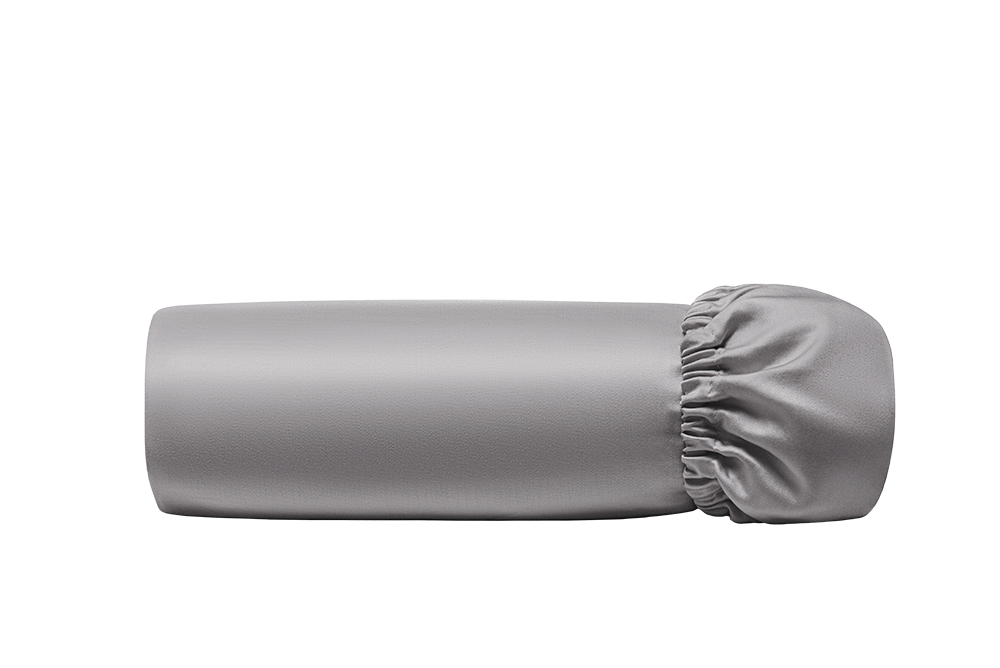


Muslin is not a material but a weave – and an attitude. Whoever buys muslin bedding deliberately decides against smooth and ironed and in favour of soft, light and naturally crinkled. Whether that suits you comes down to three questions: How many layers? How heavy? And how honest is the maker about shrinkage?
In this guide you will learn what muslin actually is, why the number of layers says more about quality than any brand name, how muslin feels compared with percale, sateen, flannel and lyocell – and who, honestly, it is not for.
What is muslin, exactly?
Muslin describes a light, loosely woven plain-weave cotton fabric. Unlike percale, where the threads sit tightly together, muslin deliberately leaves air between warp and weft. After weaving, the fabric is washed and dried – the threads contract slightly and the characteristic fine crinkle appears that makes muslin look so soft and "lived-in".1
The name goes back to the city of Mosul in present-day Iraq, through which the fabric was traded to Europe in the Middle Ages; the most famous muslins, however, came from Bengal, where in the 17th and 18th centuries fabrics were woven so fine they were traded as "woven air".1 Today muslin is best known from baby textiles – burp cloths, sleeping bags, blankets – and, for some years now, as bedding for adults.
Muslin vs. gauze vs. double gauze – all the same thing?
The single-layer fabric is usually called gauze. When two or three of these layers are joined at points during weaving, it is called double gauze or triple gauze – in retail almost always simply labelled "muslin". For bedding, only the multi-layer version is relevant.
Two layers or three? Why weight decides
The most important figure for muslin bedding is not thread count but the number of layers and the weight in g/m². The layers are joined at only a few points during weaving; air remains in between. These air pockets are what make muslin breathable – and at the same time decide how opaque and how durable the fabric is.
| Version | Weight | Opaque? | Typical use |
|---|---|---|---|
| 1-layer (gauze) | approx. 60–90 g/m² | No | Burp cloths, swaddles |
| 2-layer (double gauze) | approx. 110–120 g/m² | Partly – light colours show through | Most muslin bedding on the market |
| 3-layer (triple gauze) | approx. 180 g/m² | Yes | High-quality bedding, bedspreads |
| 4-layer | from approx. 220 g/m² | Yes | Blankets, throws – too heavy for duvet covers |
For comparison: percale bedding usually weighs 110–130 g/m², sateen 120–140 g/m², flannel 170–200 g/m². Three-layer muslin is therefore close to flannel in weight – but feels much lighter thanks to the air between the layers, and is not too warm in summer.
Pro tip: If the product description states neither the number of layers nor the weight in g/m², it is very likely two-layer standard muslin. That is not bad – but in light colours you will see the duvet through it, and it survives fewer washes.
How does muslin bedding feel?
Muslin feels soft, dry and lightly textured – not smooth, not cool, not shiny. The crinkle is fine enough that you see it more than you feel it. Many describe the feeling as "falling asleep in a freshly washed favourite shirt". If you are coming from sateen bedding, you need one night to adjust; after that, the difference is usually the reason you stay.
Muslin gets softer with every wash without linting or pilling – provided the cotton is long-staple and the fabric has not been sealed with an easy-care finish. After ten washes, good muslin feels like after a hundred.
Muslin compared: percale, sateen, flannel, lyocell
"Muslin or percale?" is the question we hear most often. Both are plain-weave cotton – and yet they could hardly feel more different.
| Property | Muslin (3-layer) | Percale | Cotton sateen | Flannel | Lyocell |
|---|---|---|---|---|---|
| Surface | Matte, finely crinkled | Matte, smooth, crisp | Lustrous, silky | Fluffy, brushed | Silky smooth, cool |
| Temperature | All year – airy in summer, not cold in winter | Cool (summer) | Cool to neutral | Warm (winter) | Cool (summer, hot sleepers) |
| Breathability | Very high | High | Medium | Low | Very high |
| Ironing | No – the crinkle is intended | Recommended for the hotel look | Hardly needed | Not needed | Hardly needed |
| Look | Relaxed, natural, "lived-in" | Clean, fresh, hotel-like | Elegant, refined | Cosy | Flowing, modern |
| Durability | High (3-layer), medium (2-layer) | Very high | High | Medium | High with gentle care |
| Ideal for | Cosy and relaxed, no ironing, sensitive skin | Hot sleepers, smooth look | Sheen & elegance | Cold bedrooms | Night sweats, allergy sufferers |
At a glance: Percale is the choice if you mainly want coolness and a smooth surface. Muslin is the choice if you want softness, volume and zero ironing. Those who have both in the cupboard usually switch to percale in high summer and to muslin for the rest of the year.
Who is muslin bedding for?
Muslin is the right choice if you:
- put softness above smoothness – muslin nestles without clinging and gets softer with every wash.
- don't want to iron – the crinkle is the design feature, not the flaw. Out of the machine, into the dryer, onto the bed.
- want bedding for the whole year – the air between the layers insulates lightly in winter and lets moisture escape in summer.
- have sensitive skin – muslin from GOTS organic cotton does without easy-care finishes and optical brighteners.
- like the natural, relaxed look – muslin looks better un-ironed than ironed.
Muslin is less suitable if you:
- love the cool, crisp-smooth feel of a freshly made hotel bed – then percale is the better choice.
- prefer a silky sheen – go for Egyptian cotton sateen.
- need maximum cooling against heavy night sweats – TENCEL™ Lyocell wicks moisture even faster.
The honest downsides of muslin
No fabric is perfect, and with muslin there are three things you should know beforehand:
- Muslin wrinkles – always. If you want a smooth surface, you won't be happy. Ironing doesn't help: the crinkle disappears, and with it the softness and the volume.
- Muslin shrinks in the first wash. Depending on quality, 5–10%. Reputable makers factor the shrinkage into the cut, so the stated size is the size after washing. Ask if it isn't stated – otherwise the 135x200 duvet won't fit the cover after the first wash.
- Two-layer muslin shows through and lasts less long. In white and pastel tones the duvet shows through, and the thin layers tear at the joining points sooner. Three-layer costs more but lasts for years.
What to look for when buying
Layers and weight
Look for the explicit statement "3-layer" and a weight around 180 g/m². If both are missing, assume two-layer.
Cotton and certifications
- GOTS (Global Organic Textile Standard) – the strictest standard for organic textiles. It covers not only pesticide-free cultivation but the entire processing chain including chemicals, wastewater and social standards.2
- OEKO-TEX Standard 100 – confirms that the finished product has been tested for harmful substances and is safe for direct skin contact.3
- Fairtrade-certified production – ensures fair wages and working conditions in the manufactory.4
Workmanship
A concealed zip holds better on muslin than buttons or a hotel closure, because the soft fabric would otherwise stretch out at the opening. Also make sure no "easy-care" or softener finish has been applied – it makes the fabric soft at first but seals the fibre and prevents muslin from getting even softer over time.
Care: wash, tumble dry, don't iron
| Care step | Recommendation |
|---|---|
| Washing | 40 °C, colours or easy-care programme. Close the zip, turn the cover inside out. Wash once before first use. |
| Detergent | Liquid detergent without bleach and optical brighteners. No fabric softener – it coats the fibre and takes away muslin's breathability. |
| Tumble dryer | Low setting, do not over-dry. With muslin the dryer is actually welcome: it brings back the crinkle and the volume. |
| Ironing | No. Ironing flattens the crinkle and makes the fabric flat and stiff. Just shake it out. |
| First wash | Muslin shrinks once. With good bedding this is already factored in – the stated size is the size after washing. |
Muslin bedding from AMQUA
Our Seralino muslin is three-layer at 180 g/m² and is made from 100% GOTS-certified organic cotton in a Fairtrade-certified manufactory in India, OEKO-TEX Standard 100 tested. Shrinkage is already factored into the cut: 135x200 stays 135x200 – even after the twentieth wash. Duvet cover and pillowcases close with a concealed YKK® zip in matching colour.
Available as a duvet cover set in 135x200, 155x220 and 200x200 cm and as pillowcases in sets of 2 in seven sizes – each in White, Beige, Dark Grey and Dark Green. Plastic-free packaging, free shipping from €25.
Sources
- Wikipedia. Muslin. Wikipedia, the free encyclopedia. en.wikipedia.org/wiki/Muslin (accessed 23 August 2026).
- Global Organic Textile Standard. GOTS – The Standard. global-standard.org/the-standard (accessed 23 August 2026).
- OEKO-TEX®. STANDARD 100 by OEKO-TEX®. oeko-tex.com (accessed 23 August 2026).
- Fairtrade International. Fairtrade Textile Standard. fairtrade.net/standard/textile (accessed 23 August 2026).