


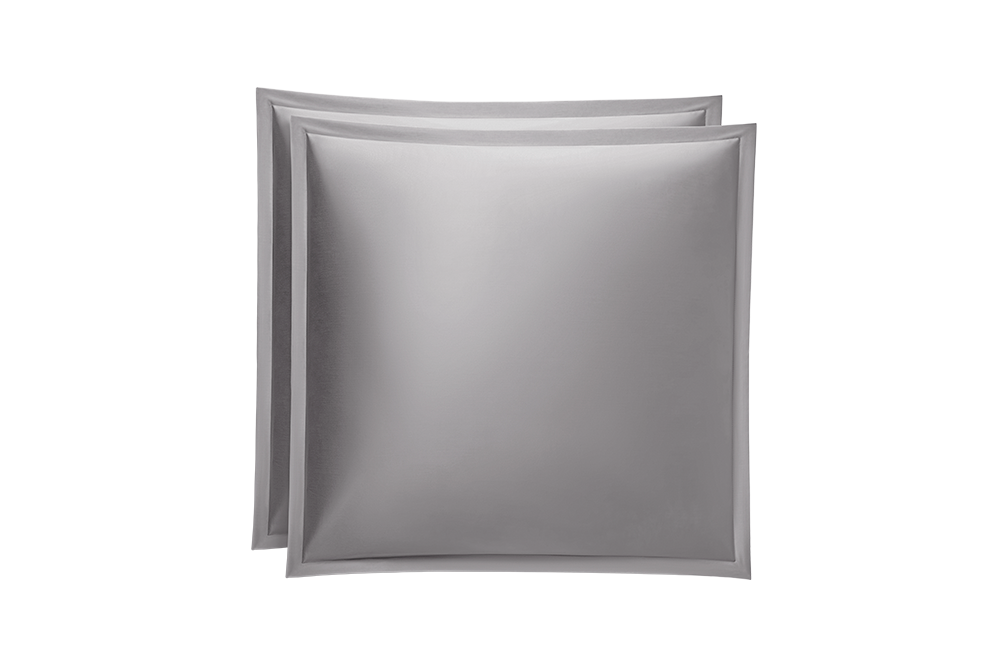
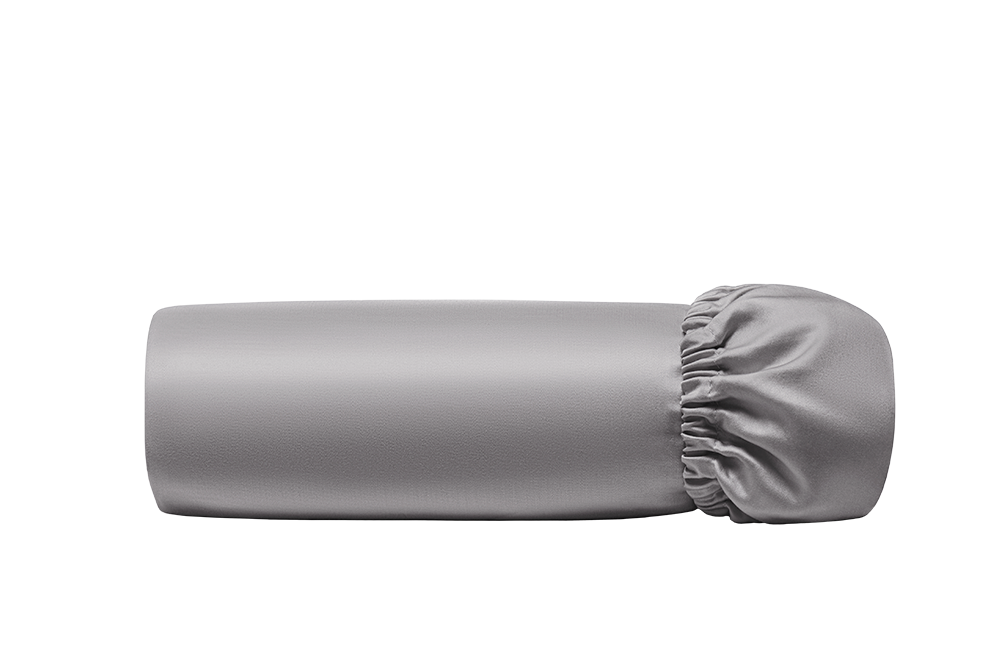
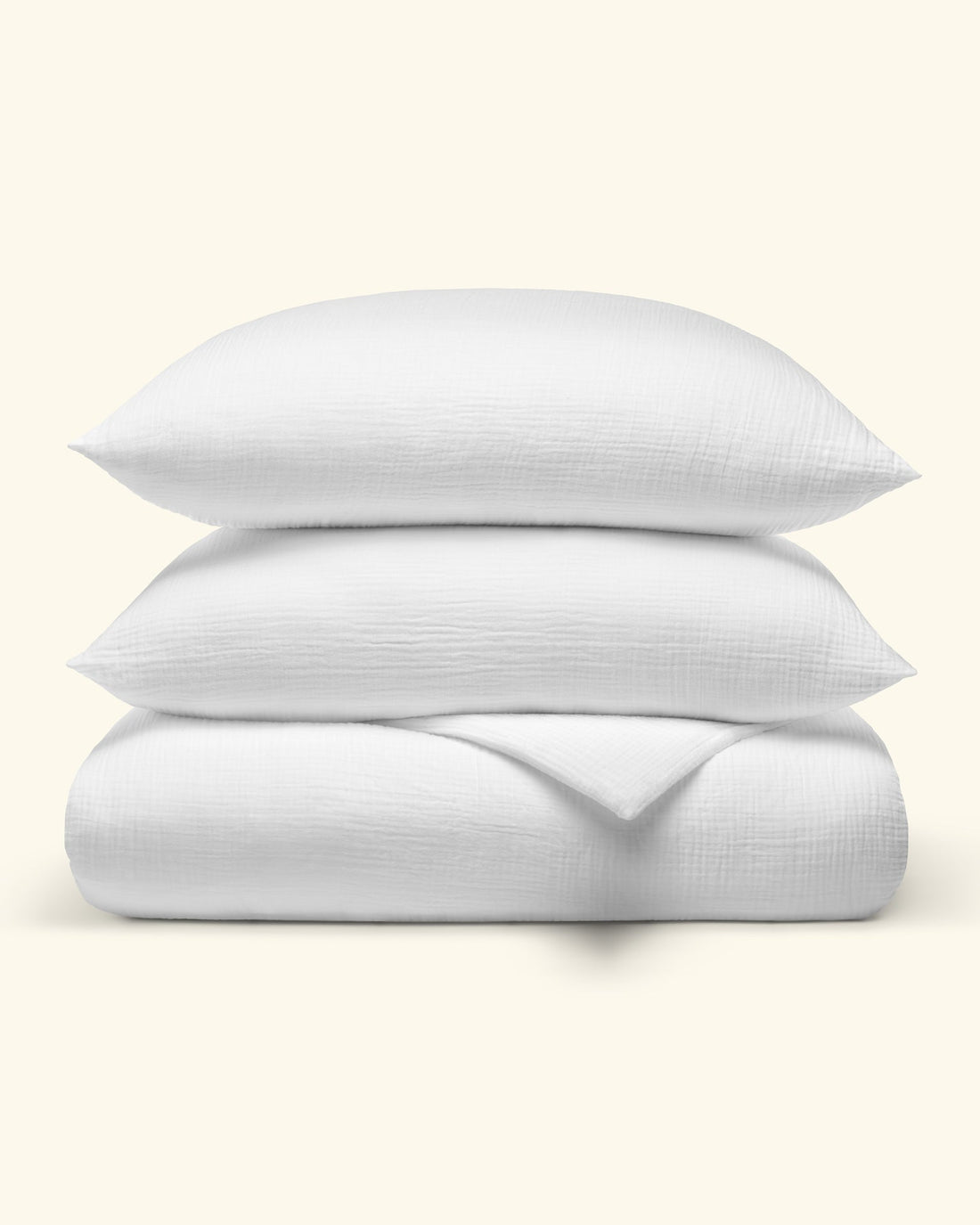

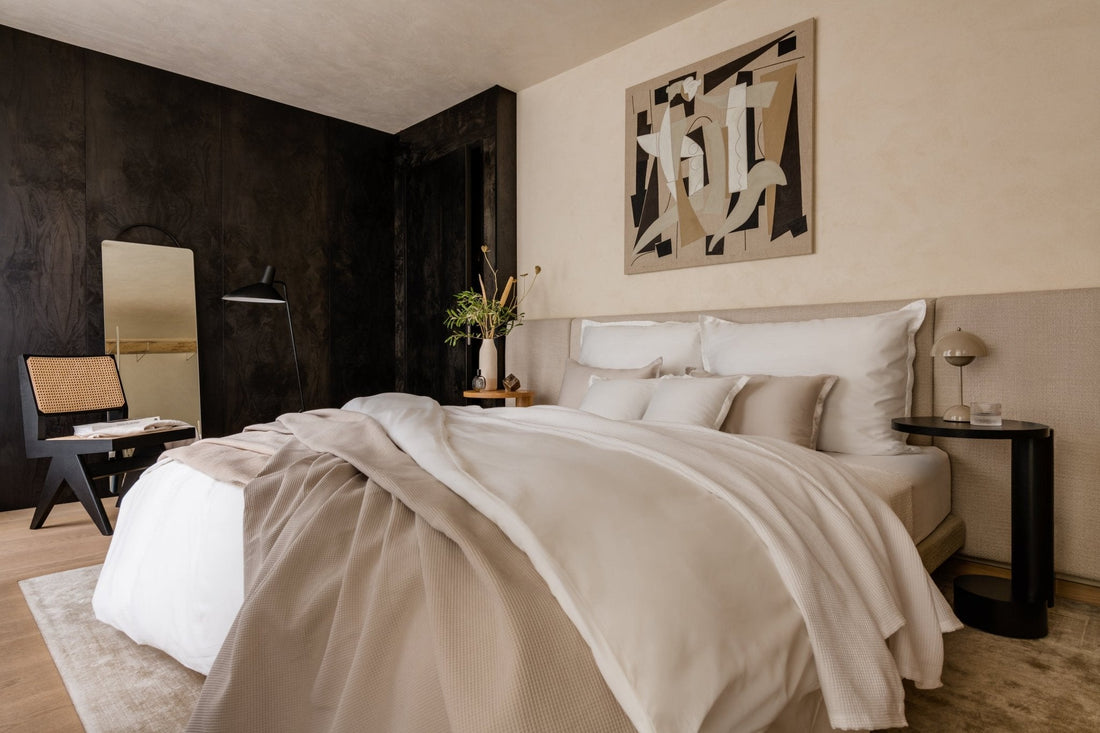
Mako sateen is on a lot of bedding labels. Some shops say it is always Egyptian cotton. Others say something else. This lesson explains what the name means and how to spot good Mako sateen.
What is Mako sateen?
The word has two parts. „Sateen“ is a weave: the way the threads run over and under each other. „Mako“ is an old name for an Egyptian cotton with especially long fibres.1 Where the name comes from is explained in the lesson What is Egyptian cotton?
Today, cotton bedding in a satin weave is usually called „Mako sateen“ or simply „cotton sateen“.1
What is in the name
„Mako“ describes the fibre, „sateen“ the weave.

In short: „Mako“ is about the fibre, „sateen“ about the weave. Together they make smooth cotton bedding.
How is Mako sateen woven?
Every fabric has lengthwise and crosswise threads. In a satin weave, one thread passes over four others before it goes under one.5 That leaves long stretches of thread lying side by side on top. They reflect the light, so the fabric has a soft sheen and feels smooth.
How Mako sateen is woven
The thread stays on top for a long stretch: that makes the surface smooth.

On the back, the threads are short and cross often. That is why the back is matt.1
Two sides, one fabric
Long stretches of thread on top, short ones underneath.

In short: one thread floats over four, then goes under one. That makes the top smooth and shiny and the back matt.
Is Mako sateen always Egyptian cotton?
No. Many pages say so, but the name proves nothing. For the fibre content, the EU only allows set names such as „cotton“.2 „Mako“ is not one of them. The word „cotton“ alone does not tell you where it comes from.
Only the Egyptian Cotton Association seal with a licence number shows that. The association publishes which manufacturers hold a licence, and it can check with a DNA test whether a fabric really contains Egyptian cotton.3
In short: no. As the fibre, the label only says „cotton“. The seal and licence number show whether it is Egyptian.
Satin, Mako sateen, polyester satin: the difference
„Satin“ on its own only says how the fabric is woven. If no material is named, it can be polyester.1
| Made of | What it is like | |
|---|---|---|
| Satin | silk, cotton or synthetic fibre | smooth and shiny; the word says nothing more |
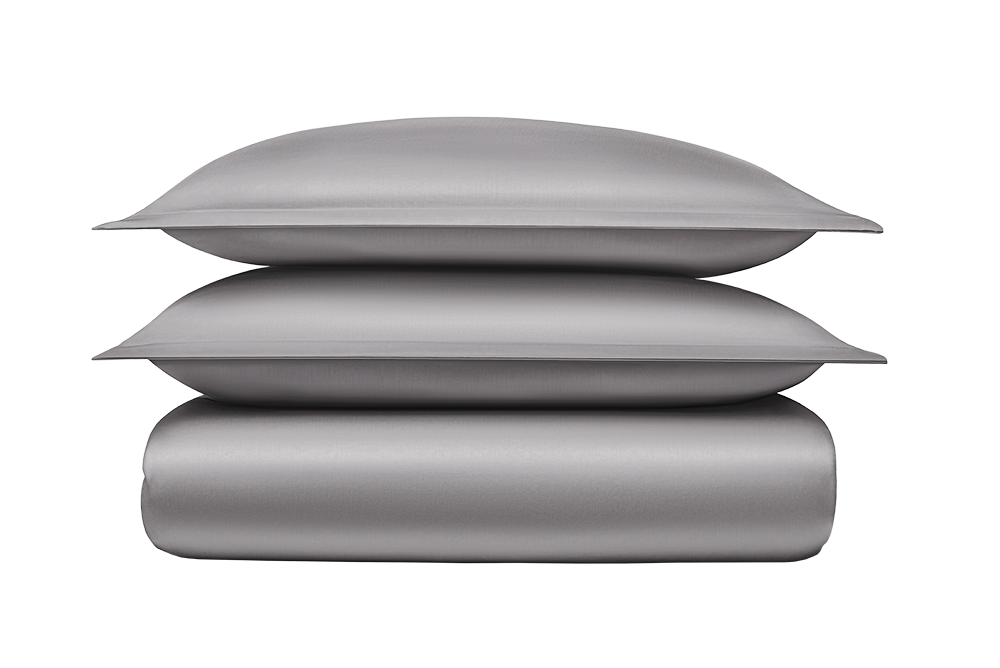
| Mako sateen | cotton | smooth, soft sheen, absorbs moisture, lets air through |
| Polyester satin | synthetic fibre | very smooth, stronger shine, lets less air through |
Cotton lets more air through than polyester and absorbs moisture well.5 In bed you notice it when you get warm.
In short: satin is the weave. Mako sateen is cotton and breathes better than polyester satin.
How to spot good Mako sateen
- Long fibres: the longer the fibre, the smoother and stronger the yarn. Short fibres stick out more and form small bobbles.5
- Combed yarn: combing removes the short fibres before spinning. The yarn becomes smoother and softer.5
- About 300 threads: very high numbers such as 1,000 often come from plied threads being counted twice. More in the lesson What is Egyptian cotton?
- A seal: if the pack says „Egyptian“, a seal and licence number belong with it.3
In short: long fibre, combed yarn, about 300 threads and a seal – no inflated numbers.
The honest downsides of Mako sateen
- More delicate than percale: the long stretches of thread on top can catch on claws, Velcro or rough skin.5
- Creases a little: Mako sateen creases little but is not crease-free. We do not use a chemical easy-iron finish.
- The fitted sheet does not stretch: woven fabric hardly gives along the threads.5 The elastic all round holds the corners. It never sits as tight as a jersey sheet.
- A little warmer than percale: if you get hot very quickly at night, percale sleeps a little cooler.
In short: Mako sateen is more delicate than percale, creases a little, and the fitted sheet does not stretch. In return it is especially smooth.
Care: washing, drying, ironing
| Step | How |
|---|---|
| Washing | 40 °C on a gentle cycle, up to 60 °C if heavily soiled; close the zip |
| Detergent | liquid, no bleach, no fabric softener |
| Dark colours | wash separately the first few times |
| Drying | tumble dry low, take out straight away and shake out |
| Ironing | iron on low to medium heat for a silky smooth feel; unironed it looks casually crinkled |
In short: wash gently at 40 °C, zip closed, no fabric softener – and Mako sateen stays smooth for a long time.
What this means for your bed
- You like smooth bedding that works all year: Mako sateen.
- You want it as soft and smooth as possible: Mako sateen from Egyptian cotton.
- Organic seals matter to you and you want a lower price: Mako sateen from organic cotton.
- You get hot quickly at night, or pets sleep in your bed: percale.
- You cannot decide between the two: Percale or sateen – which is better?
Our Mako sateen: Egyptian or organic?
We sell Mako sateen in two versions. Both are soft and have 300 threads. The difference is the fibre.
Two fibre lengths
The longer the fibre, the smoother the yarn.

| Egyptian cotton | Organic cotton | |
|---|---|---|
| Fibre | Giza 92, extra-long: 35.1 mm4 | organic cotton, long: about 30 mm6 |
| Yarn | single-ply | single-ply |
| Weave | sateen, 300 threads | sateen, 300 threads |
| Feel | very soft, the smoothest | soft, a little less smooth |
| Seals | Egyptian Cotton Association (licence no. 1628), OEKO-TEX® STANDARD 100 | GOTS, Fairtrade, OEKO-TEX® STANDARD 100 |
| Made by | family mill in Portugal, 3rd generation | family mill in India, 3rd generation |
In short: both are soft. For the softest, smoothest feel choose Egyptian cotton – the extra-long fibres make the smoother yarn. For organic seals and a lower price choose organic cotton.
Free shipping to Germany and Austria, 100-day trial from the date of purchase.
Mako sateen from Egyptian cotton →
Mako sateen from organic cotton →
Sources
- Wikipedia. Satin (German). de.wikipedia.org (retrieved 8 November 2026).
- Regulation (EU) No 1007/2011 on textile fibre names, Art. 5 and Annex I. eur-lex.europa.eu (retrieved 8 November 2026).
- Egyptian Cotton Association. Accredited Manufacturers. egyptiancottonassociation.com (retrieved 8 November 2026).
- Cotton Research Institute / Egyptian Cotton Association. Egyptian cotton figures 07/10/2026. egyptiancottonassociation.com (retrieved 8 November 2026).
- Fashionary. Textilepedia – The Complete Fabric Guide. Hong Kong 2021, pp. 012, 019, 064, 075, 076.
- Indian Council of Agricultural Research. Extra long staple cotton (length classes after Sundaram et al. 2002: long 27.5–32 mm, extra-long from 32.5 mm). krishi.icar.gov.in (retrieved 8 November 2026).